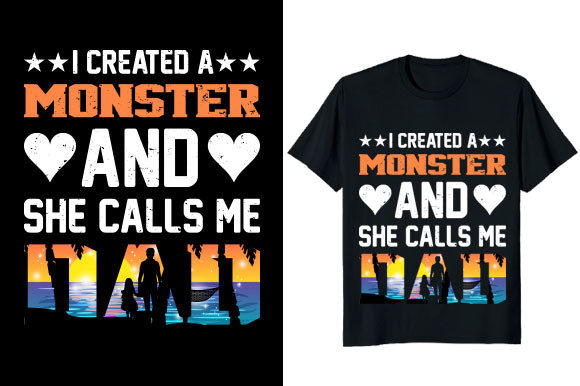
I Created a Monster She Calls Me Dad
There is a specific kind of magic that happens when you take a digital file and turn it into something tangible. As someone who has spent years reviewing machine embroidery design assets for both personal hobbies and commercial ventures, I have learned to look past the pretty mockups and ask the hard questions: Will this stitch out cleanly? Does it hold up after twenty washes? And most importantly, will the customer feel the love in every thread?
Recently, I got my hands on a file titled I Created a Monster She Calls Me Dad. On paper, it sounds like another generic holiday graphic. But in the context of a real-world embroidery project, the potential here is surprisingly high. This isn't just a piece of T-Shirt Designs; it is a narrative tool. It tells a story about parenthood, humor, and family bonds before the first needle even touches the fabric.
The First Stitch: Visual Personality and Mood
When I first opened the preview files for I Created a Monster She Calls Me Dad, the immediate impression was one of warmth mixed with playful chaos. The layout feels organic rather than rigid. In the world of embroidery file creation, layout is everything. If the text and imagery are too crowded, the stitches fight each other. If they are too sparse, the design looks unfinished.
This design strikes a balance that works beautifully for handmade product lines. The phrase suggests a character-driven theme, likely featuring a monster motif alongside the text. For an embroiderer, this means we are looking at a mix of satin stitch for the outlines and lettering, and perhaps some fill stitch or running stitch for the monster's texture. The mood is perfect for gifts that need to be both sentimental and funny—a "dad joke" stitched into reality.
It creates a visual personality that screams "fun parent." It doesn't try to be elegant or formal; it embraces the messiness of raising kids. That authenticity is exactly what drives engagement on platforms like Etsy or at craft fairs. When a buyer sees this design, they aren't just buying a shirt; they are buying a moment of recognition.
Real-World Application: From Scrap Fabric to Boutique Shelf
Let me walk you through a scenario where I would actually deploy this design. Imagine you are preparing for the upcoming holiday season. You have a client who wants a custom gift for their partner, but they want something unique. They don't want a mass-produced ornament; they want something worn.
I envision taking I Created a Monster She Calls Me Dad and stitching it onto a heavy cotton canvas tote bag. The durability of the bag pairs well with the rugged nature of a "monster" theme. Alternatively, imagine a baby onesie made from soft jersey knit. The contrast of the playful text against a tiny garment hits a sweet spot for new parents. The design fits perfectly as a personalized gift because it speaks directly to the relationship between parent and child.
For small business owners, this is a goldmine for custom apparel. Think of sweatshirts for father-son matching sets or aprons for a dad who loves to cook (and maybe burns things occasionally). The design also translates well to embroidered patch applications, which can be sewn onto denim jackets or backpacks. Even a pillow cover for a nursery could benefit from this whimsical touch, turning a standard decor item into a conversation starter.
The versatility extends to holiday embroidery projects too. While not strictly Christmas-themed, the sentiment fits perfectly for Father's Day or birthdays. A boutique selling handmade goods would find this design adds value to their collection without feeling forced. It bridges the gap between a simple digital embroidery file and a finished product that customers are proud to wear.
Navigating the Challenges: Where to Be Careful
However, not every surface is created equal, and as a reviewer, I must point out where this design might struggle. I Created a Monster She Calls Me Dad requires careful consideration regarding fabric choice and hoop size.
If you are working with a small hoop size, such as those used for caps or hat panels, you need to scrutinize the detail level. If the monster's features are intricate, they may blur together when compressed. Similarly, if the design includes tiny lettering, it risks becoming illegible on stretchy fabrics like thin t-shirts or athletic wear. Without proper stabilization, the tension can cause the letters to pucker, ruining the professional look.
Dense stitch areas are another potential pitfall. If the design relies heavily on fill stitch over a large area, it can become stiff and uncomfortable, especially on baby clothes or items meant for frequent washing. Textured fabrics, like fleece or bouclé, can hide the definition of the stitches, making the design look muddy. In these cases, you might need to adjust the thread colors or simplify the background elements.
Curved surfaces like baseball caps present their own set of challenges. While the design might look great flat, the distortion around the curve can stretch the text. If you plan to use this for commercial embroidery on headwear, test run is non-negotiable. You must ensure the design maintains its readability from all angles.
Design Judgment: Value, Trust, and Presentation
The success of any embroidery project comes down to trust. When a customer buys a handmade item, they expect quality. A poorly executed design can undermine the entire brand. I Created a Monster She Calls Me Dad has the potential to elevate a product line if handled correctly. The clear, bold nature of the message ensures that the recipient immediately understands the sentiment, which enhances the emotional value of the gift.
From a branding perspective, this design fits seamlessly into a shop focused on family, humor, and creativity. It signals that the seller understands their audience. Whether you are listing it as a Etsy seller or running a small shop product line, the design acts as a visual hook. It stands out in a sea of generic floral patterns or abstract art because it connects on a human level.
The inclusion of a printable mockup in the download package is a smart move for sellers. It allows you to visualize how the finished product will look on different garments before you commit to production. This helps in setting realistic expectations for clients and prevents costly mistakes.
Practical Notes for the Designer
Before you hit the start button on your machine, there are a few critical steps to ensure success. First, always test the design on scrap fabric. This is the only way to truly gauge the stitch density and see how the threads interact with your specific material. Check the thread color contrast carefully; a dark monster on a black shirt might disappear, while bright colors on a light background pop.
Review the hoop size requirements listed in the file details. If the dimensions are tight, consider resizing slightly, but be wary of distorting the aspect ratio. Confirm whether the design works for both personal and commercial projects by checking the license terms provided with the download. Do not assume rights to sell finished items unless explicitly stated.
Inspect the small details closely. Sometimes, fine lines in a vector file don't translate well to thread. If the design includes delicate corners or tiny accents, they might require a stabilizer upgrade or a change in stitch type. Use a stabilizer appropriate for the fabric weight to prevent puckering. Finally, compare the design in black and white mockups to ensure the composition holds up without the distraction of color.
In conclusion, I Created a Monster She Calls Me Dad is more than just a Graphics asset; it is a versatile tool for creative entrepreneurs and hobbyists alike. With thoughtful execution and attention to technical details, it can transform into a cherished keepsake or a best-selling product. It captures the essence of modern parenting with a wink and a smile, proving that sometimes the best designs are the ones that make us laugh while we work.